The Economic Costs of Brexit on the UK
February 2, 2026
Brexit has had a substantial economic impact on the United Kingdom, with adverse effects on investment, productivity, employment, and growth.

While economists broadly agree that the benefits of cross-border trade outweigh costs in the aggregate, distributional impacts often vary widely. Our posts on international trade focus on the effects of tariffs, how globalization impacts domestic wages and employment, the role of diversified supply chains in building economic resilience, industrial policy, protectionism, and trade deficits

February 2, 2026
Brexit has had a substantial economic impact on the United Kingdom, with adverse effects on investment, productivity, employment, and growth.
January 15, 2026
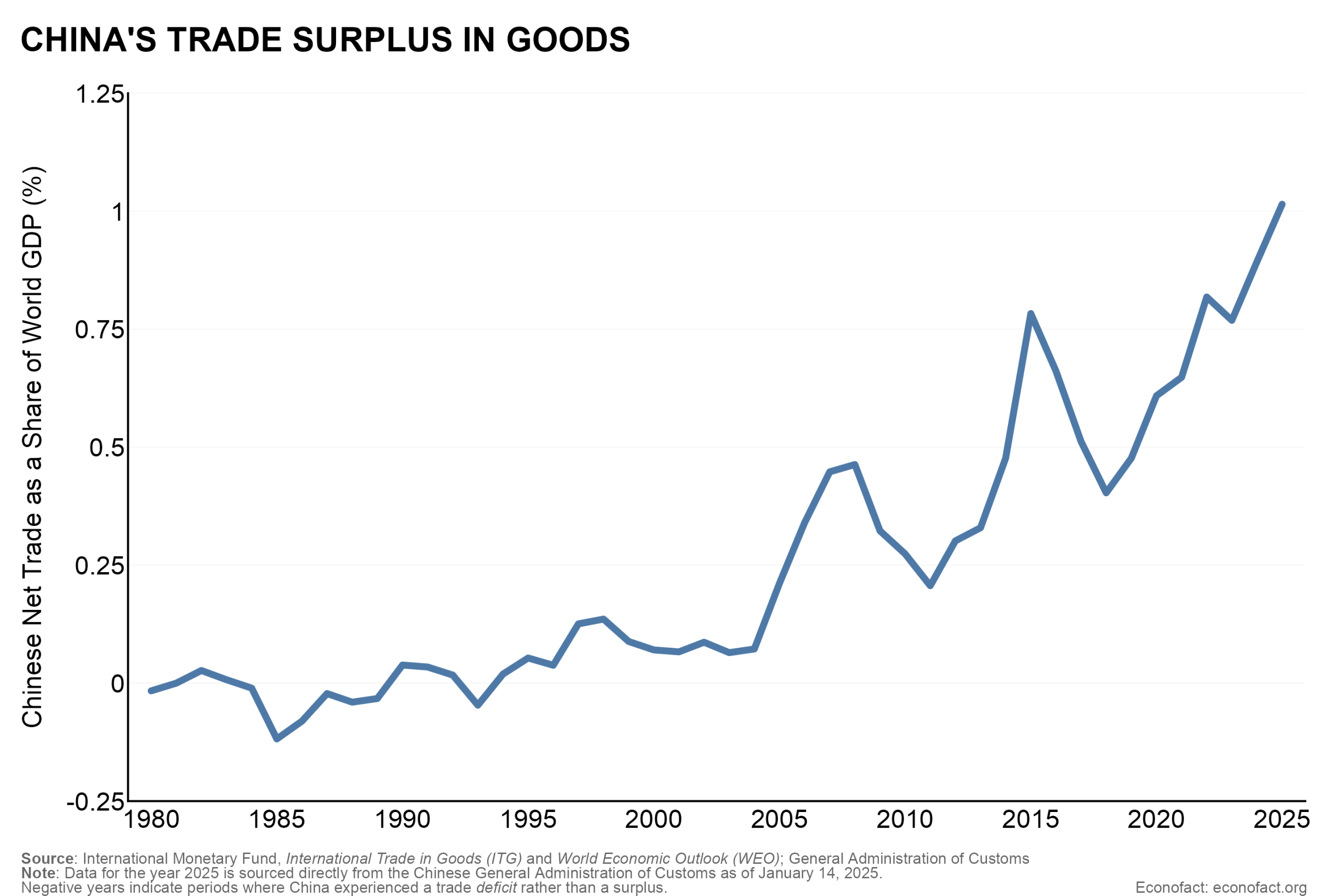
Chinese dependence on manufacturing as an engine of growth has increased, as resistance to Chinese imports is growing abroad and domestic demand remains low.
December 4, 2025
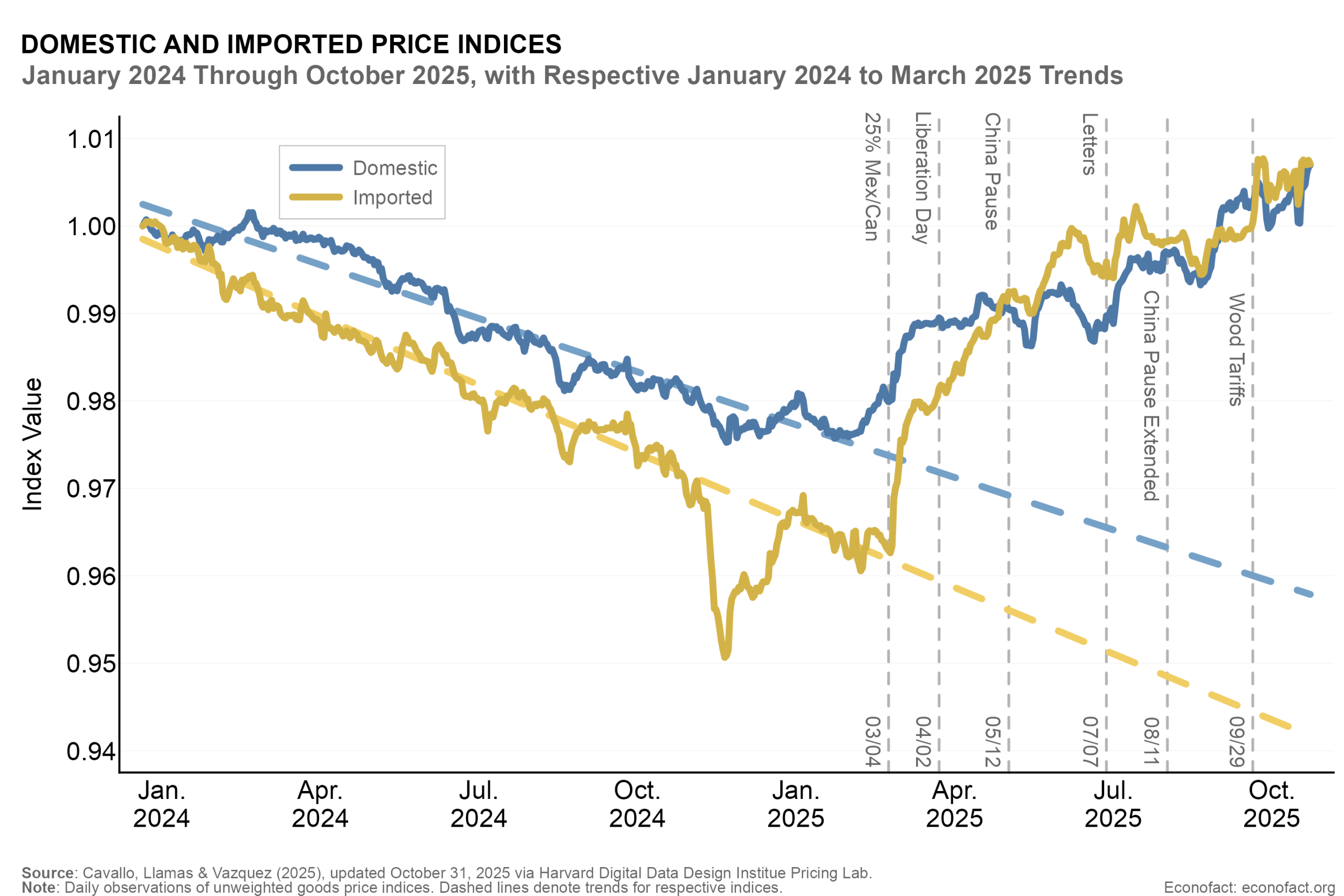
Prices of over 350,000 products at major U.S. retailers show a slow and gradual pass-through of tariffs to consumers. Both imports and U.S.-made goods are affected.

October 20, 2025
The Trump administration’s trade and immigration policies are having negative effects on agriculture, compounding the impact of low commodity prices and high costs.
July 30, 2025
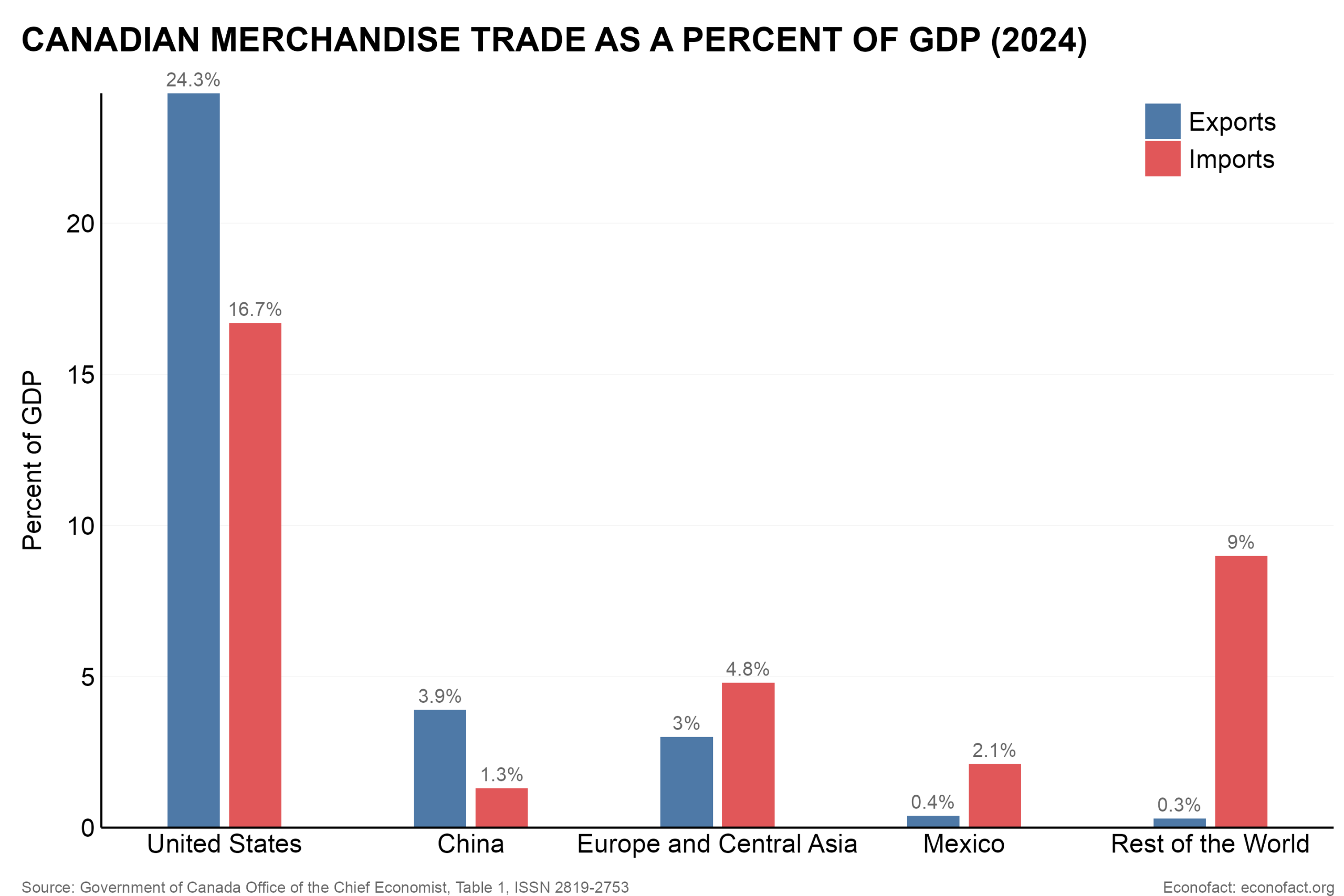
Canada’s economy is highly vulnerable to trade disruptions with the U.S., and has limited scope for enacting retaliatory tariffs.

July 6, 2025
The U.S. depends on China for rare earth components in many military and high-tech products. Building an alternative rare earth supply chain is years away.

April 15, 2025
The U.S. has been running a trade deficit every year since 1975. However, both exports and imports have more than doubled since the beginning of this period.
October 21, 2024
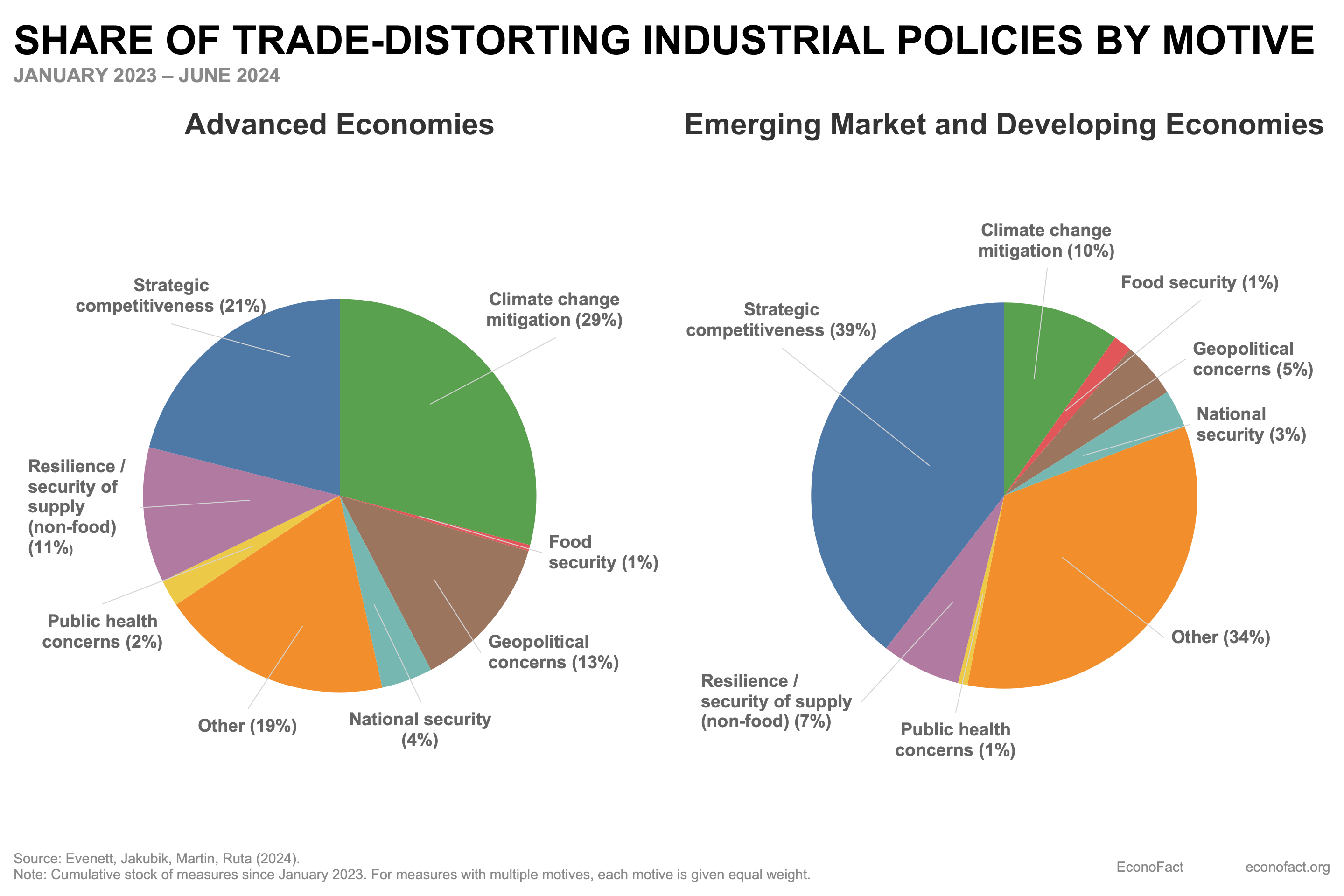
The largest economies in the world are leading a revival of industrial policies in support of a broad range of goals beyond manufacturing competitiveness.
July 8, 2024
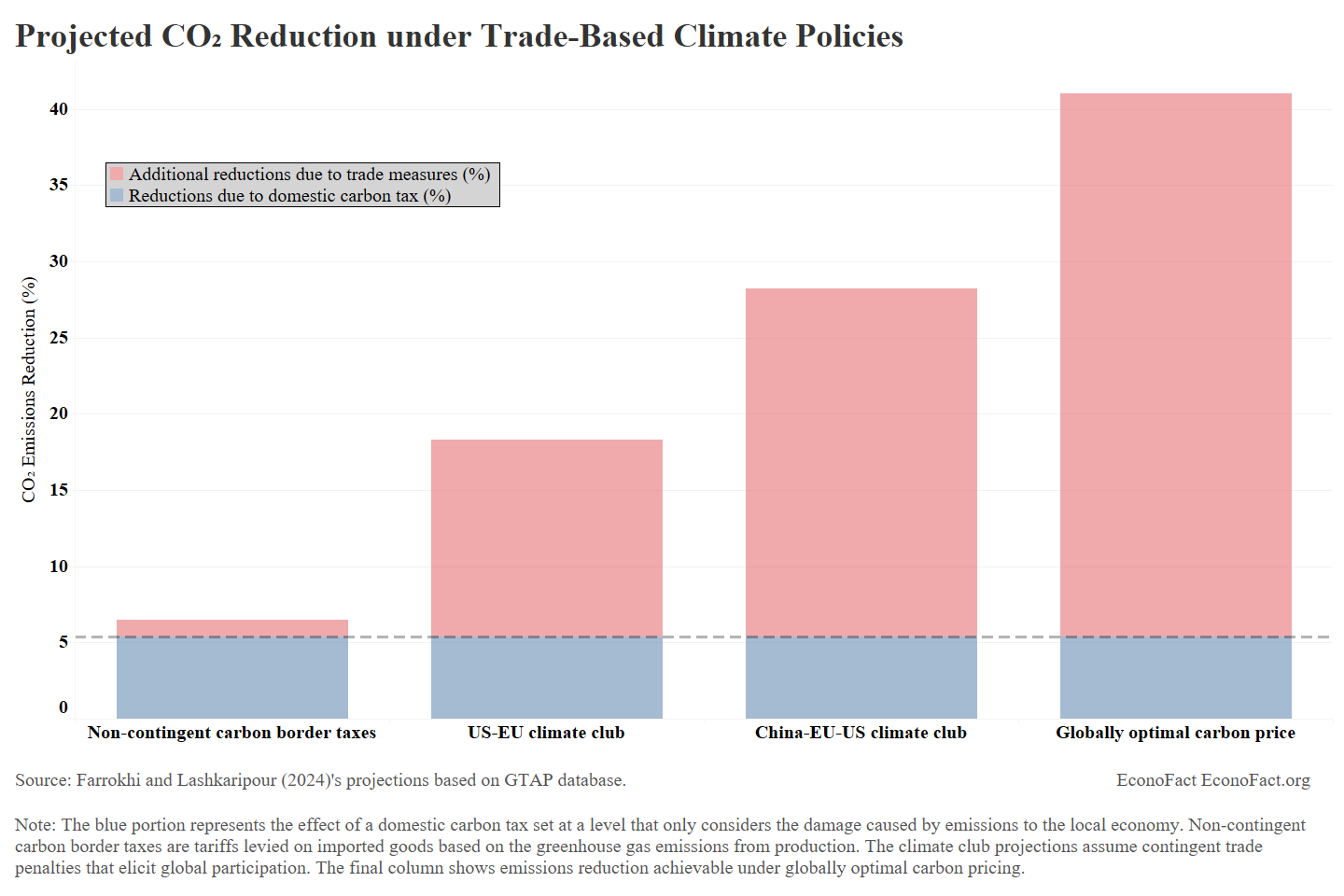
Trade policy could help reduce global carbon emissions significantly. But simply adding carbon border taxes to the existing tariff system is not very effective.